
5. Hypotension

📄Definition  

Hypotension refers to abnormally low blood pressure, typically defined as:

  • SBP <90 mmHg or

  • MAP <65 mmHg

Can be acute (e.g. in shock) or chronic/asymptomatic.

📊 Types of Hypotension

  1. Orthostatic (Postural): >20 mmHg systolic or >10 mmHg diastolic drop on standing within 3 minutes.

  2. Shock-related: due to circulatory collapse (e.g. sepsis, cardiogenic shock).

  3. Neurogenic: spinal injury or autonomic dysfunction.

  4. Drug-induced: antihypertensives, diuretics, nitrates, anaesthetics.

🛡️ Aetiology

🧠 Mnemonic: SHOCKED
  • Sepsis (vasodilation)

  • Haemorrhage/hypovolaemia

  • Obstruction (e.g. PE, tamponade)

  • Cardiogenic (e.g. MI, arrhythmias)

  • K (Potassium – electrolyte imbalance)

  • Endocrine (Addison’s, hypothyroid)

  • Drugs (e.g. antihypertensives, alcohol)
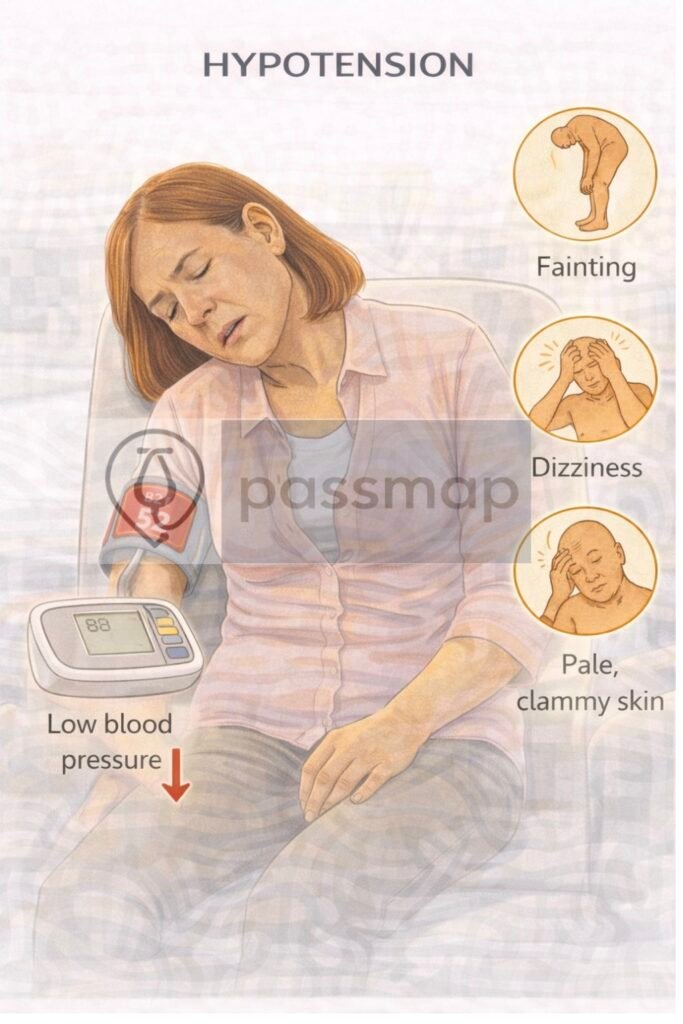
🩺Clinical Features

  • Dizziness or light-headedness

  • Syncope or near-syncope

  • Blurred vision

  • Fatigue

  • Nausea

  • Cold, clammy extremities (in shock)


🔬Investigation

  • Observations: BP lying & standing, HR, RR, SpO2

  • ECG: arrhythmias or MI

  • FBC, U&Es: anaemia, dehydration

  • Lactate: shock indicator

  • Cortisol/ACTH: adrenal insufficiency

  • TFTs, glucose: endocrine causes

  • CXR, echo, CT: structural or septic causes (if unwell)

Management

🧠 Mnemonic: PRESSURE

  • Position (lying flat, legs elevated)

  • Review medications

  • Exclude life-threatening causes (shock)

  • Saline IV fluids (0.9% NaCl)

  • Sepsis protocol if suspected

  • Use vasopressors in ICU if needed

  • Reassess after intervention

  • Educate on lifestyle changes (hydration, slow standing)

🚩Red Flags

  • SBP <90 mmHg with symptoms

  • Suspected sepsis, MI, PE, or adrenal crisis

  • Falls or unexplained syncope

  • New onset postural hypotension in elderly

🔎 Key PARA Exam Traps

💡 MAP Calculation: You might be asked to calculate the Mean Arterial Pressure (MAP).

MAP = SBP + (2 x DBP) / 3
 

💡Beta-Blocker Overdose: If a patient is hypotensive and bradycardic, think Beta-blocker or Calcium Channel Blocker overdose. The antidote often used in exams is Glucagon.

💡Pulmonary Embolism (PE): If the patient is hypotensive with a suspected PE, they are classified as a “Massive PE.” The “next step” changes from anticoagulation to Thrombolysis

🔺 Last updated in line with BMJ Best Practice (2025/2026) – Assessment of Hypotension • Last updated: October 2025

  • PARA-aligned, reviewed February 2026


🔒 PASSMAP ensures all content is NICE-aligned and reviewed for Physician Associate Registration Assessment (PARA) success.

Educational platform. Not medical advice.

Scroll to Top